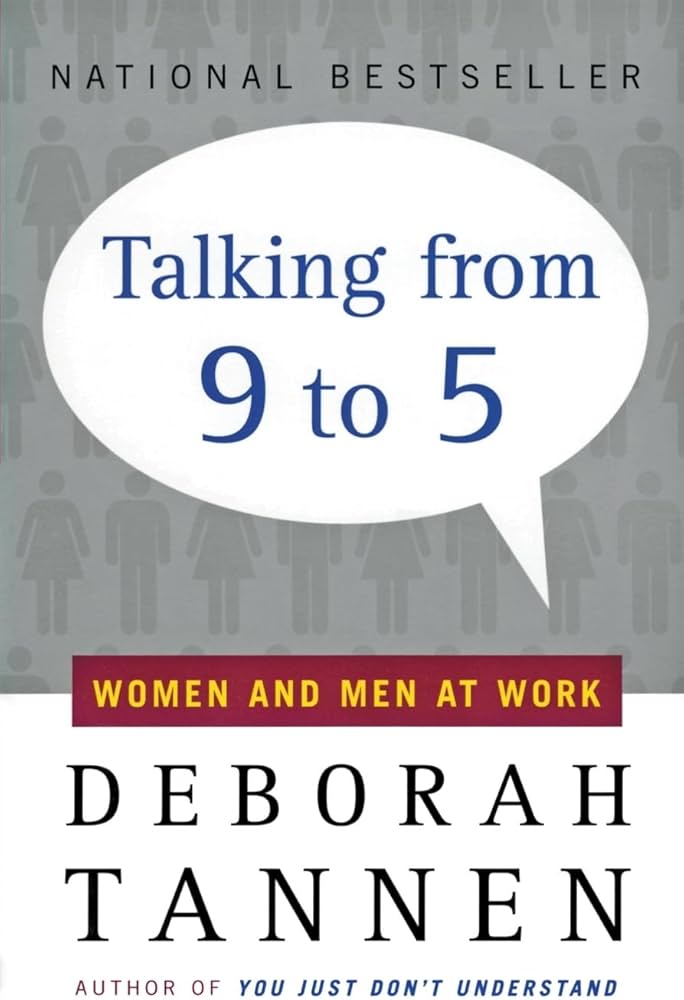
Tannen’s (1994) third chapter in Talking from 9 to 5: Men and Women at Work did not make me nearly as bristly as chapter two because she presented a nuanced look at the pros and cons of directness and indirectness and their use with both men and women. Thus, I had to think harder about my communication style and how I interpret what others are saying. Tannen insisted that being indirect is not “manipulative” (p. 82) just because we do not like that communication style. I would agree with Tannen here, especially compared to the interviewer in chapter two who lulled Tannen into a sense of trust and then wrote a negative article.
On the other hand, I noticed the samples of conversations that Tannen analyzed were between people in subordinate and authority positions. I’m confused about why a subordinate wants their boss to humble themselves instead of viewing their relationship as a team with a leader. If a leader says indirectly that she wants something done, I would not be surprised that their employee missed the message. Asking directly is part of the relationship if what the boss is asking to be completed is part of the employee’s duties.
However, if the task is outside the worker’s regular duties, the boss can acknowledge that: “I understand this task is outside your normal duties, but we have a gap that needs to be filled. Please check your schedule now and tell me if you can do X today and be done by 5:00PM.” If the employee does not have time, the task can be delegated elsewhere.
I realize my opinion sounds stubborn, as if I am right and other ways of communicating are wrong, but my mode of communicating changed as I got older and interacted with more people who were openly autistic or have ADHD. I became aware of how indirect communication was harmful to the neurodivergent people I talked to. As a result, I thought more carefully about each message I sent or said. I think being direct is clearer so long as the speaker recognizes and respects the relationship they are in.
References
Tannen, D. (1994). Talking from 9 to 5. Virago.
 Melanie Page
Leave a comment